Chemical application recordkeeping built for golf courses: logged the same day, weather attached automatically, and printable spray sheets with the fields your state asks for. When the inspector wants an application from two seasons ago, you pull it up in seconds, not a weekend of digging through binders.
Records only get kept when keeping them is easy. TurfCaddie is built so the log happens where the spray happens.
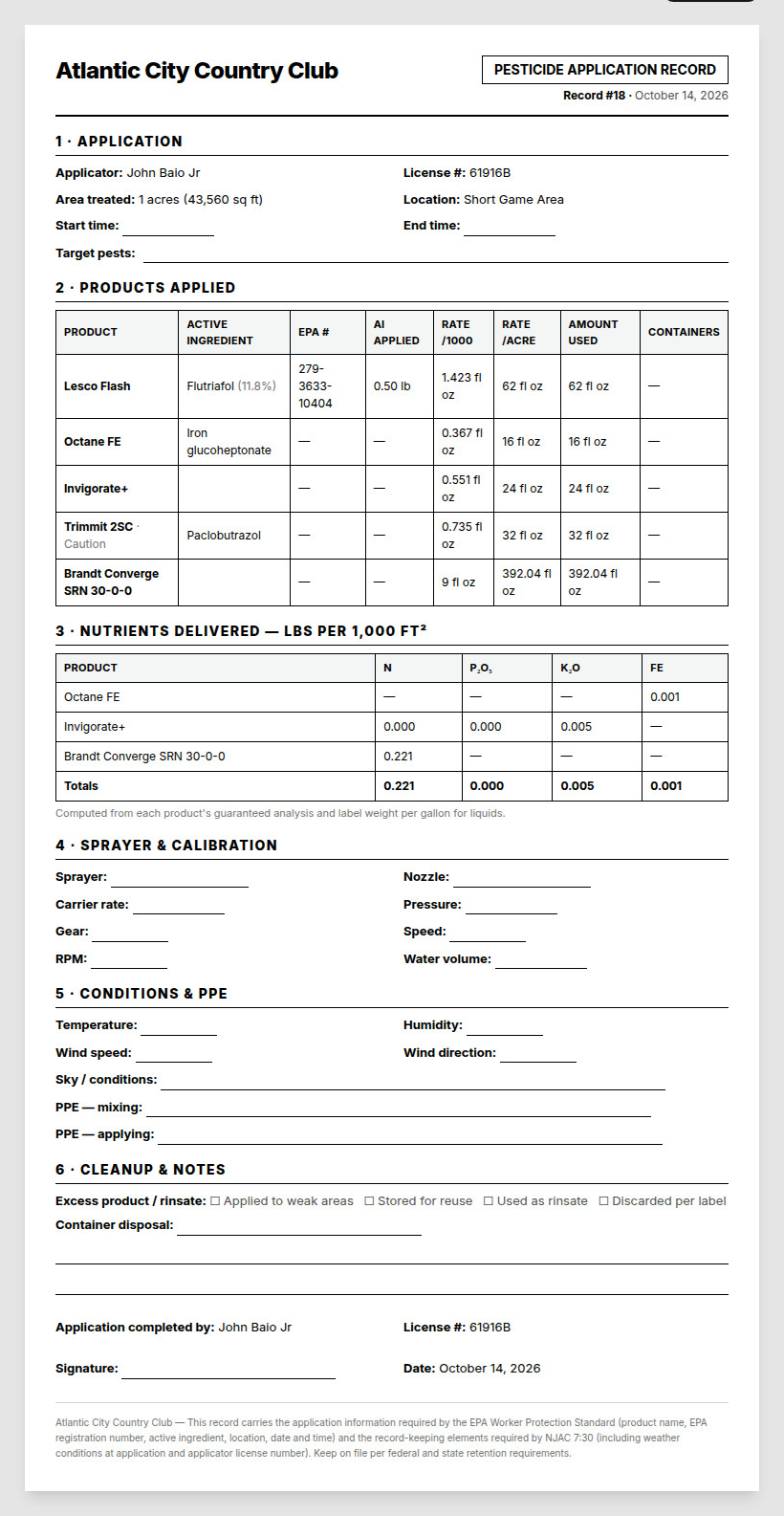
Product, EPA registration number, rate, area treated, target pest, applicator, all captured in a flow designed for the spray tech, not the office. Tank mixes supported, and inventory deducts automatically as you log.
Wind, temperature, and humidity at the time of application are recorded with the log, the drift-relevant conditions inspectors ask about, without anyone writing them down by hand.
Re-entry intervals show as an actual time the crew can act on ("back on at 2:30 PM"), not a number of hours someone has to do math on at 5 AM.
Every application prints as a clean, state-compliant spray sheet: WPS fields, product and EPA number, rates and totals, area and target, applicator, weather, REI, and PPE, laid out the way an inspector reads it and the way an applicator fills a tank by it.
Print one for the rig, file one for the office, pull one up on screen years later. It's the same record in every form, because it comes from the same log. No re-typing, no transcription errors.

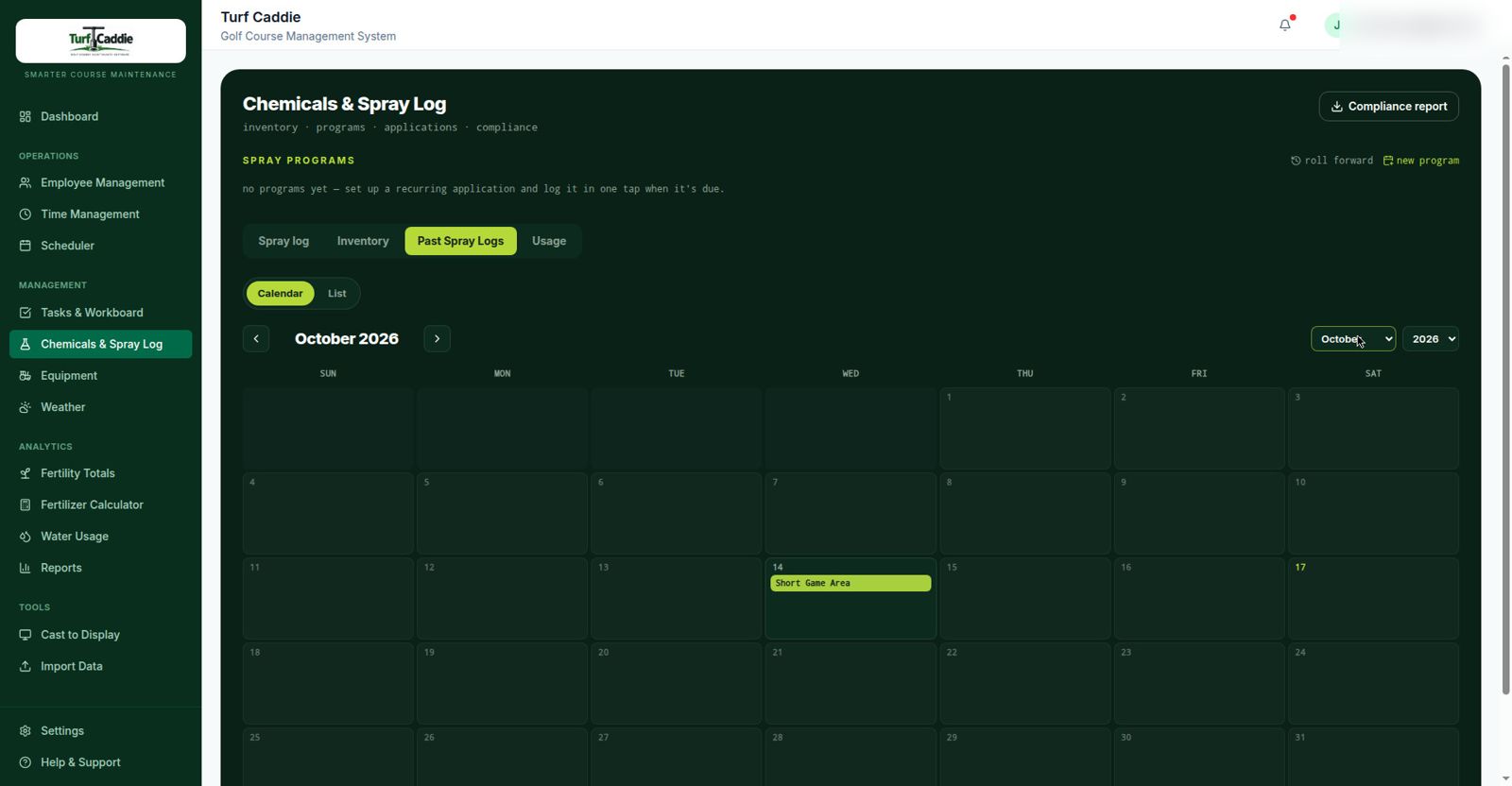
Every application lives on a calendar view of your season. See what's gone down, where, and when, and what's due next against your program and your GDD windows. Planning next month's sprays starts from a true picture of last month's, not from memory.
Tap any day to open the full record and print its spray sheet. History stops being a binder problem and becomes a glance.
Good records aren't something you assemble before an inspection. They're what falls out of logging properly every day. Same-day logging, complete fields, and retention measured in years mean the answer to any inspector's question is a search, not a project.
Each application you log joins the season record, with its products, rates, and re-entry status attached.
The temperature, wind, and conditions from application day are captured on the record as you log it. Nobody reconstructs weather from memory in February.
Log a spray and its re-entry clock starts. The log shows which REIs are still active, so nobody walks onto a treated area early.
Applications pull the products they used out of stock as they are logged. The shelf count and the spray record agree, because they come from the same entry.
TurfCaddie was built and is used in the Mid-Atlantic, where state recordkeeping rules are specific, and specific is what the sheets are designed for.
NJ applicators work under NJDEP pesticide rules (N.J.A.C. 7:30) with detailed application records expected for commercial work. TurfCaddie's sheets carry the NJ-required record fields as a matter of course, and its home course operates under the same rules yours does.
Pennsylvania applicators must be able to produce complete application records on demand. TurfCaddie keeps product, rate, area, applicator, and conditions together in one retrievable record, printable as a sheet PA inspectors are used to seeing.
Delaware's commercial applicator rules are explicit: records capture product and EPA number, dilution and amount, date and area, target pest, applicator, and weather where drift matters, logged within 24 hours and kept for two years. TurfCaddie's same-day logging and field set were designed to satisfy exactly that list.
New York applicators face detailed recordkeeping and reporting expectations, including for commercial applications. Keeping every application complete, dated, and retrievable turns annual reporting and any records request into an export, not an excavation.
Outside the Mid-Atlantic? The record fields (product/EPA number, rate, area, pest, applicator, weather, REI, PPE) are the common core every state's rules build on. If your state asks for it, there's a field for it.
Spray records in TurfCaddie don't live alone. They're tied to the inventory they drew from, the weather that day, and the board the crew worked from.
Applications deduct from stock automatically. Your chemical inventory reflects what was actually sprayed, which also feeds fertility totals for the season.
The spray shows up on the day's board like every other job, so the record and the assignment are the same event. see the workboard.
Growing-degree-day tracking runs alongside your spray history, so PGR intervals and pre-emergent windows are planned against what's already down.
Start a 30-day pilot and log real applications in TurfCaddie. White-glove setup includes your chemical inventory, imported with you, so your records start complete, not empty.
Apply for the Pilot